Tidy SEO AI Refresh: First Look at the New Content-Decay Plugin for WordPress
By Day Zero Guides Editorial · How we produce guides
Some links in this guide are affiliate links. If you sign up through them, Day Zero Guides may earn a commission at no extra cost to you. This never affects which products we cover or what we say about them. See our affiliate disclosure for details.
Pricing: What You Actually Get Today
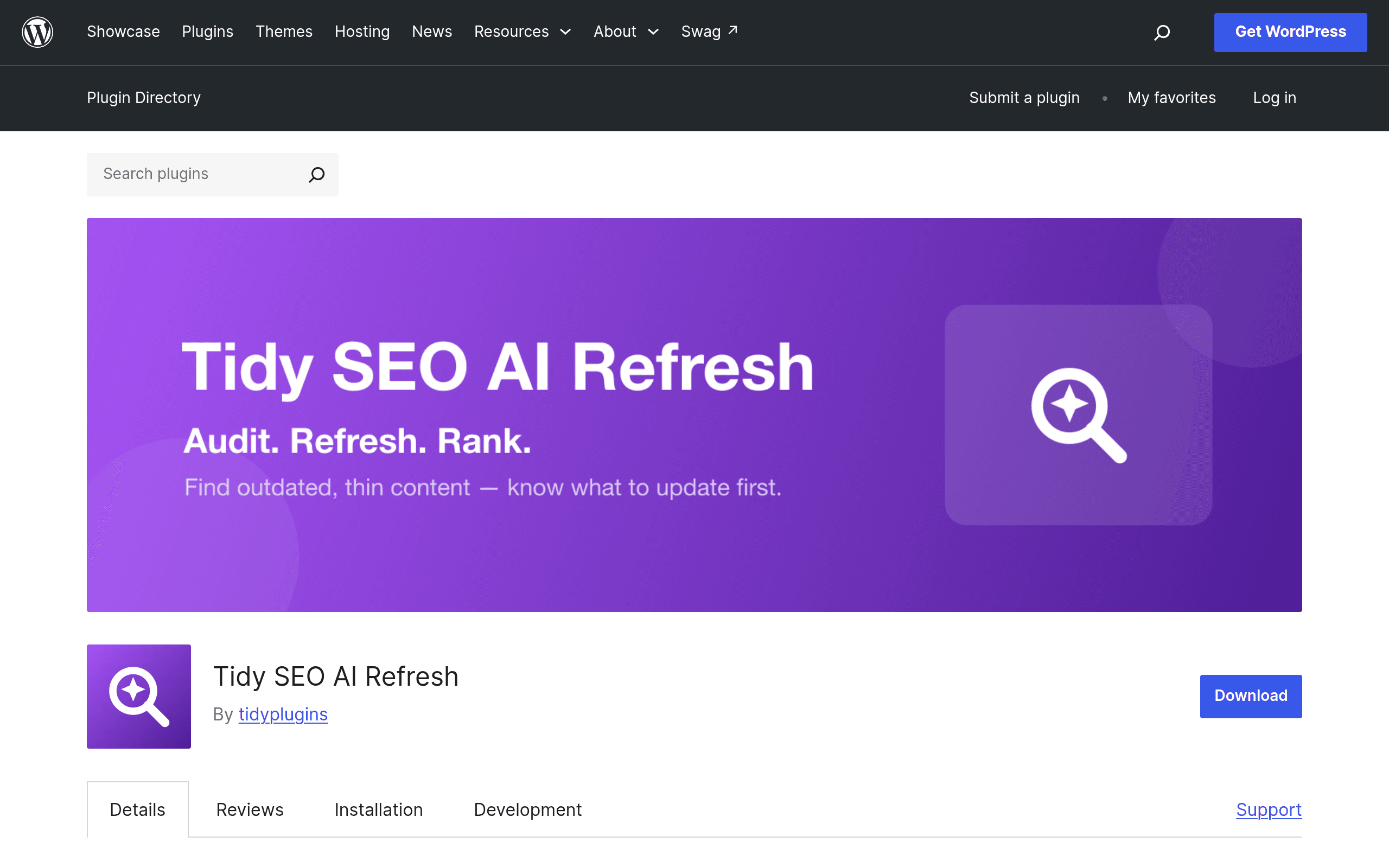
Here's the thing to know before you install anything: Tidy SEO AI Refresh has not published a pricing page or premium tier structure yet. It's distributed through the official WordPress.org plugin repository, which means the version you can install right now is free, full stop — no trial countdown, no paywall on activation.
That said, the feature set (automatic weekly audits, cannibalization detection, AI-assisted priority scoring) is exactly the kind of thing that typically graduates into a "Pro" upsell once a plugin builds an install base. Based on how similar WordPress SEO tools have monetized — Rank Math, Yoast, All in One SEO — expect a freemium split to show up within a few months: free for single-site scanning and basic health grades, paid for things like bulk site audits, multisite support, or deeper AI rewrite suggestions. If you install it today expecting a lifetime-free tool, be prepared for that to change.
What the free version buys you right now:
- A dashboard health grade for every published post/page
- Priority scores based on freshness, length, heading structure, images, internal links, and schema
- Weekly automated re-audits (no manual re-scan needed)
- Cannibalization detection (multiple pages competing for the same keyword)
- Orphan page detection (pages with no internal links pointing to them)
- Internal link suggestions generated from your existing content
For a zero-dollar install, that's a genuinely useful content-maintenance layer that neither Yoast nor Rank Math handles natively — both are built around optimizing new content before you hit publish, not auditing a backlog of old posts.
What Problem This Is Actually Solving
Most WordPress SEO plugins are front-loaded: they nag you about keyword density and meta descriptions while you're writing a new post. They do almost nothing for the 200 posts you already published in 2021 that are quietly losing rankings because the content is stale, the headings are a mess, or three other posts on your site are cannibalizing the same keyword.
Tidy SEO AI Refresh is built for that backlog problem specifically. It runs in the background, scores everything you've already published, and tells you — in priority order — what to fix first. That's a meaningfully different job than Yoast's green/red traffic light on a single post editor screen.
Concrete Use Cases
- A food blog with 400 recipe posts from 2018–2022: instead of guessing which old recipes to update, the dashboard surfaces the 15 highest-priority posts based on traffic-relevant decay signals (old publish date + thin content + no schema markup), so a solo blogger can tackle rewrites in a logical order instead of randomly.
- A SaaS company blog with overlapping "best X software" posts: cannibalization detection flags three posts all targeting "best project management tools," letting the content team consolidate into one authoritative page instead of splitting rankings three ways.
- An agency managing a client site redesign: orphan page detection catches cornerstone pages that lost their internal links during a site migration — pages that still rank but are invisible in the site's own navigation and link graph.
- A news/magazine site publishing daily: the weekly automated audit means editors get a Monday-morning digest of which older articles dropped in health grade, without anyone manually running a crawl.
How It Compares
| Tidy SEO AI Refresh | Yoast SEO | Rank Math SEO | Semrush Site Audit | |
|---|---|---|---|---|
| Price | Free (WordPress.org); premium tiers not yet published | Free core; Premium ~$99/year per site | Free core; Pro ~$59/year, agency tiers up to ~$499/year | Bundled in Semrush Pro (~$139.95/mo) and up — not sold standalone |
| Core focus | Auditing and prioritizing already-published content for decay | On-page optimization while writing new content | On-page optimization + schema + 404 monitoring while writing | Technical site-wide crawl (broken links, redirects, Core Web Vitals, crawlability) |
| Content decay / freshness scoring | Yes — built-in priority scoring system | No | No (readability/keyword checks only) | No (technical health, not content freshness) |
| Cannibalization detection | Yes, automatic | No | Limited (manual keyword tracking) | No |
| Orphan page detection | Yes | No | No | Yes, as part of broader crawl |
| Runs inside WordPress admin | Yes, native | Yes, native | Yes, native | No — separate web app, connects via API/crawl |
| Best for | Sites with a large backlog of aging content needing triage | Writers who want real-time on-page guidance per post | Users who want Yoast-like guidance plus more technical SEO controls | Agencies needing full technical audits across any CMS, not just WordPress |
The honest takeaway: Tidy SEO AI Refresh isn't really competing head-on with Yoast or Rank Math — it's solving a different stage of the problem. Most sites will end up running it alongside Yoast or Rank Math, not instead of them. Semrush Site Audit overlaps more on the technical side (orphan pages, crawl health) but costs real money and isn't WordPress-native, so for a single-site blog it's overkill just to get content-freshness scoring.
Should You Install It Today?
If you're maintaining a WordPress site with more than, say, 50–100 published posts and no system for deciding what to update first, installing this costs you nothing and takes about ten minutes to get an initial scan. The real risk isn't wasted time — it's that pricing is unpublished, so you can't yet budget for what happens when (not if) a premium tier appears. Install it for the free audit value now, but don't build a workflow that assumes every current feature stays free forever.
If your site is small (under 20 posts) or brand new, you won't get much out of it yet — there's no decay to detect. This tool earns its keep on sites with history, not sites still finding their first hundred posts.