EPFolio Review: A Free WordPress Plugin That Builds Your Entire Portfolio Site in One Click
Some links in this guide are affiliate links. If you sign up through them, Day Zero Guides may earn a commission at no extra cost to you. This never affects which products we cover or what we say about them. See our affiliate disclosure for details.
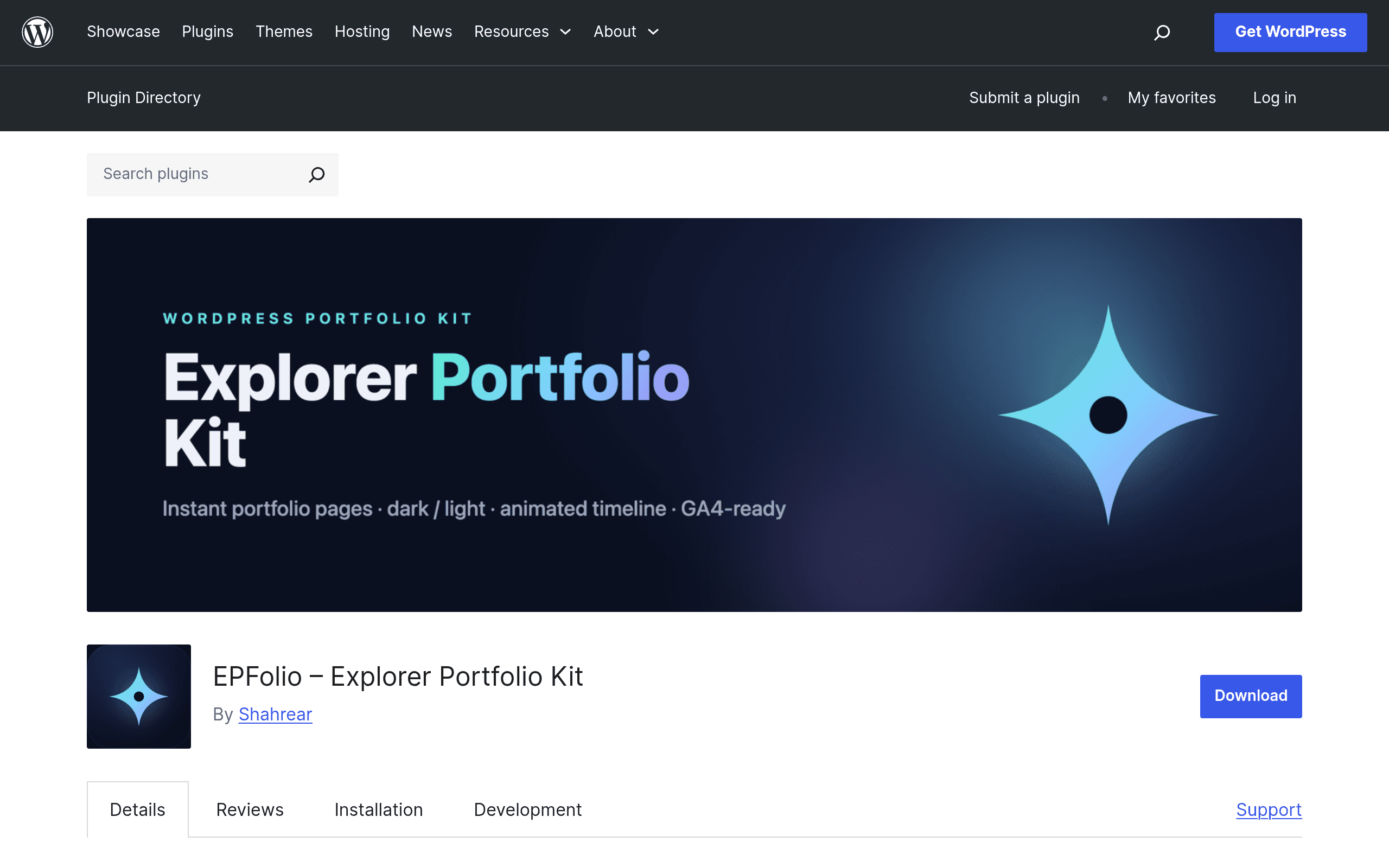
What EPFolio Actually Does
EPFolio is a WordPress plugin — not a hosted platform, not a SaaS subscription, just a plugin you install on an existing WordPress site — that scaffolds out a full personal portfolio using WordPress's native block editor. Instead of starting from a blank page and manually building an About section, a publications list, a timeline, and a contact form, EPFolio generates all of it in one click: academia, professional experience, research, volunteering, and blog sections, plus a working search, dark/light mode toggle, animated timelines, a contact form, and GA4 analytics wired in out of the box.
The pitch is aimed squarely at people who don't want to touch a page builder or hire someone to make them a portfolio site — grad students, postdocs, adjunct faculty, freelancers, and early-career professionals who need something presentable fast and don't want recurring bills.
Pricing: It's Free, Full Stop
EPFolio is distributed through the official WordPress.org plugin repository, which means:
- $0 to install and use. No freemium paywall, no "pro" upsell tier as of this writing, no license key.
- You still need WordPress hosting and (usually) a domain, which is where your actual cost lives — anywhere from a free WordPress.com blog to $5–15/month shared hosting (Bluehost, SiteGround, Hostinger) if you self-host.
- No transaction fees, no watermarks, no "upgrade to remove branding" nags.
This is the single biggest differentiator from every alternative below, all of which charge monthly whether you use 10% or 100% of their features.
Who This Is Actually For
- A PhD student on the job market who needs a CV-adjacent site with publications, teaching experience, and a research statement, updated the night before an application deadline.
- A freelance consultant who wants a professional/volunteering split without paying for Wix's business tier just to get a contact form.
- A postdoc or early-career academic who already has a WordPress site (many universities provide one) and just needs structure without learning Elementor or Divi.
- Someone who wants to own their content. Because it's WordPress core blocks, your portfolio isn't locked into a proprietary builder — you can export, migrate hosts, or hand it to a developer later without lock-in.
It is not for someone who wants drag-and-drop pixel-level design control, or a photographer who needs gallery-first templates — that's a different job, and Showit or Wix do that better.
What's Genuinely Notable
- No external libraries or heavy frameworks. The plugin description emphasizes it's built on native WordPress blocks rather than bundling in jQuery plugins, animation libraries, or a separate framework — which matters for page speed and long-term maintenance (fewer third-party dependencies to break on a WordPress core update).
- GA4 built in. Most portfolio plugins leave analytics as a manual code-snippet job. EPFolio wires up Google Analytics 4 without a separate plugin like MonsterInsights.
- One-click generation, not one-click hosting. It sets up the content structure and sections instantly, but you're still responsible for WordPress hosting itself — this is a content/structure plugin, not a hosting platform.
What to Watch Out For
- Being new on WordPress.org, it doesn't yet have the years-deep review history or update cadence track record that established portfolio plugins have — worth checking the "last updated" and active install count before committing a production site to it.
- Design flexibility is inherently more limited than a dedicated builder like Showit, since it works within block editor patterns rather than a freeform canvas.
- You'll still need to know basic WordPress (installing plugins, editing pages) — it removes the portfolio-structure work, not the WordPress learning curve entirely.
How It Stacks Up
| EPFolio | Showit | Wix Portfolio | WordPress.com Starter | |
|---|---|---|---|---|
| Price | Free (plugin only; hosting separate) | $29–39/month (with Canva partnership discounts) | $17–29/month (Wix Premium plans) | $4/month (billed annually, ~$48/yr) |
| Setup speed | One-click section generation on existing WP site | Drag-and-drop from template, several hours typical | Drag-and-drop ADI or template, an hour or two | Pre-built theme, manual content entry |
| Best for | Academics/professionals needing CV-style sections fast | Photographers/creatives wanting pixel-precise visual design | Freelancers wanting an all-in-one hosted builder | Bloggers wanting a simple hosted WP site |
| Built-in analytics | Yes, GA4 wired in natively | No, requires separate integration | Wix Analytics included | Basic WordPress.com stats only |
| Platform lock-in | None — standard WP blocks, portable | High — Showit-specific site structure | High — Wix sites don't export cleanly | Low-moderate — WP.com to self-hosted migration is possible but fiddly |
| Ongoing cost | $0 (plus your existing hosting) | Recurring monthly, no free tier | Recurring monthly, free tier is very limited/ad-supported | Recurring annual, limited storage on Starter |
The Bottom Line
If you already have — or are willing to get — a basic WordPress install, EPFolio removes the tedious part of building a portfolio (structuring sections, wiring up search and analytics, building a timeline) for zero dollars. It's not going to out-design Showit for a photographer's visual portfolio, and it doesn't come with hosting like Wix or WordPress.com do. But for the specific job of "I need an academic/professional portfolio live today without a monthly bill," it's the cheapest path from zero to a structured, searchable, analytics-ready site. Given it's brand new to the repository, I'd install it on a staging site or a low-stakes personal domain first, confirm it plays nicely with your theme, and then commit — rather than betting a mission-critical job-market site on a plugin with limited track record on day one.