InternaLink Pilot First Look: Can This New WordPress Plugin Automate Internal Linking Better Than Rank Math or Link Juicer?
Some links in this guide are affiliate links. If you sign up through them, Day Zero Guides may earn a commission at no extra cost to you. This never affects which products we cover or what we say about them. See our affiliate disclosure for details.
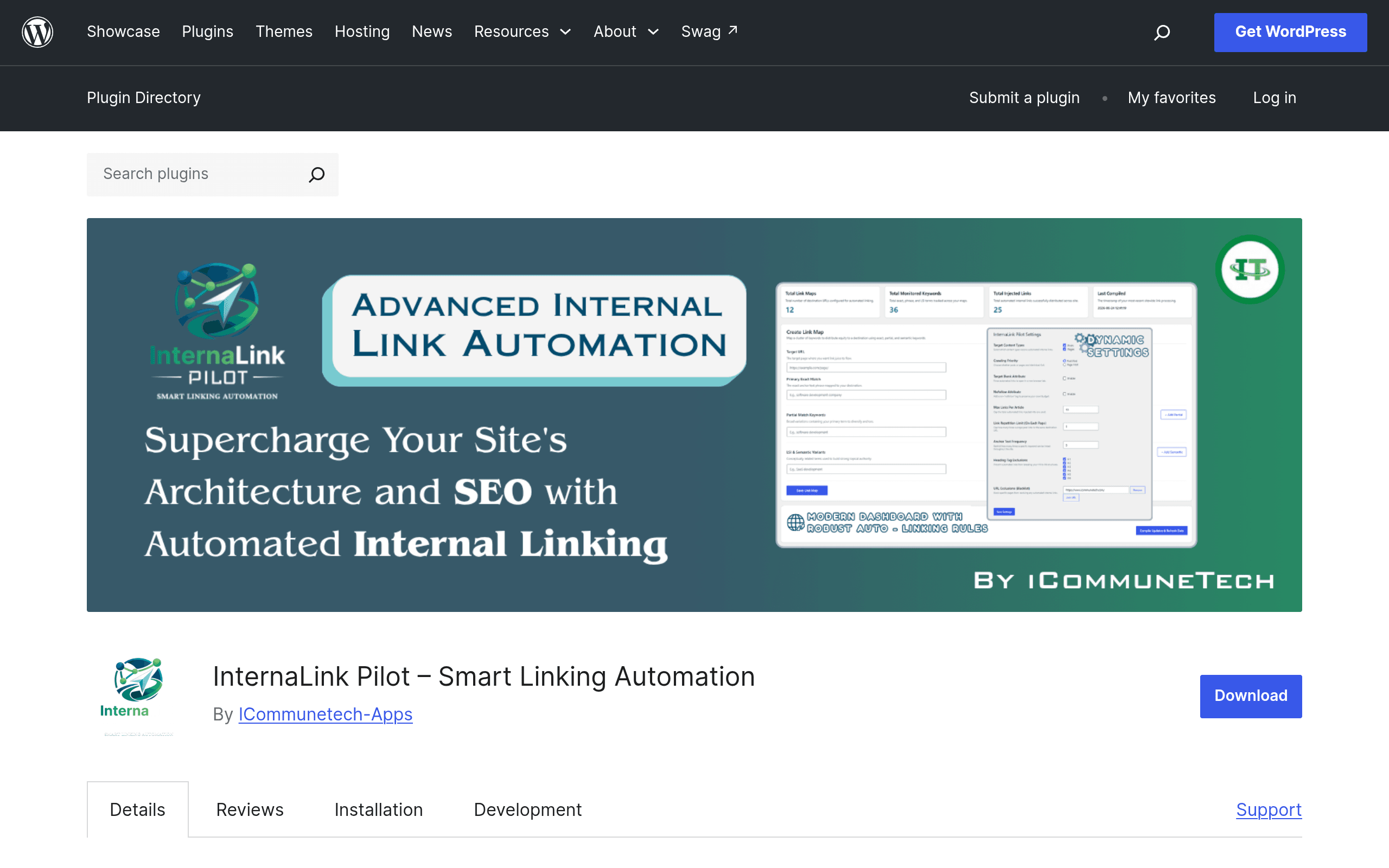
What InternaLink Pilot actually does
InternaLink Pilot is a newly listed WordPress plugin (available now on the official WordPress.org plugin repository) built to automate internal linking — the tedious job of manually finding old posts to link to whenever you publish something new. Instead of you combing through your archive, you build a "link map": a list of keywords or phrases mapped to target URLs, and the plugin scans your content (new and existing) to insert links automatically based on:
- Exact match keywords (e.g., "email marketing software" → your pillar page)
- Phrase match variants (plural forms, reordered words)
- Semantic variants (related phrasing that means the same thing, not just string matching)
On top of matching, it gives you actual control knobs that a lot of "auto-linker" plugins skip:
- Per-keyword link limits (e.g., only link "content marketing" 2 times per page, not every occurrence)
- Exclusion rules (skip headings, skip existing linked text, skip specific post types or individual posts/pages)
- Link attribute control (nofollow/sponsored/dofollow, open in new tab, custom CSS classes per link map entry)
- Background processing, so the scan-and-link job runs via WP-Cron/queued batches instead of hammering page load times or timing out on large sites
There's a central dashboard for managing all of this — link maps, exclusions, and a log of what got linked where — rather than digging through post-by-post settings.
Pricing: what's confirmed and what isn't
As of this writing, InternaLink Pilot does not have published pricing anywhere on its WordPress.org listing or an accompanying pricing page. The plugin is distributed through the official WordPress plugin directory, which means the version listed there is free to install under the GPL, as required for anything hosted on wordpress.org.
What's unclear right now:
- Whether there's a paid "Pro" tier (common for plugins in this category — free core plugin + paid add-on for higher link limits, semantic matching depth, or multisite support)
- Whether semantic matching (as opposed to exact/phrase matching) is gated behind a future paid tier
- Site-count licensing terms if a commercial version does launch
If you're evaluating this today, treat it as free-to-test with pricing terms still forming. That's normal for a plugin in its early listing stage, but it also means you should install it expecting the free feature set may not represent the final product long-term — check the plugin's changelog and settings page for any "Upgrade to Pro" prompts before you build a workflow you'd be upset to lose.
Concrete use cases
- Publishing-heavy blogs (50+ posts) that never get old content re-linked. If your team publishes 3–4 posts a week and your 2022 articles haven't been linked from anything since 2023, InternaLink Pilot's keyword-to-URL mapping means every new post automatically surfaces links to relevant older pages without an editor manually searching the archive.
- Affiliate or review sites needing controlled anchor text. Because you can set per-keyword link limits and custom link attributes (nofollow/sponsored), you can auto-link brand or product mentions site-wide while staying compliant with disclosure requirements — without hand-editing each post.
- Agencies managing client sites with inconsistent internal linking history. The exclusion rules (skip certain post types, skip pages already linked) let you retrofit an internal linking structure onto a site you didn't originally build, without breaking existing link equity by double-linking the same phrase everywhere.
- Large sites worried about performance. The background/queued processing matters if you're running a site with thousands of posts — a plugin that scans and links synchronously on page load or in a single request can crash into PHP timeout limits; batching this via cron avoids that.
How it compares
| InternaLink Pilot | Yoast SEO (Premium) | Rank Math (Pro) | Internal Link Juicer | |
|---|---|---|---|---|
| Price | Free on wordpress.org; paid tier not yet published | Premium ~$99/year per site | Free tier available; Pro ~$59–$199/year depending on plan | Free tier on wordpress.org; Pro ~$79–$89/year |
| Core focus | Dedicated internal linking automation | Full on-page SEO suite (internal linking is a minor feature via "link suggestions") | Full SEO suite with a content AI/link-building module | Dedicated internal linking automation |
| Keyword matching depth | Exact, phrase, and semantic variant matching | Manual suggestions based on cornerstone content, not automated insertion | Rule-based auto-linking, primarily exact/phrase match | Exact and phrase match keyword-to-post mapping |
| Link limits & exclusions | Per-keyword limits, post/page/type exclusions | Not applicable (suggestion-only, no auto-insert) | Link limits per keyword, some exclusion rules | Per-post link limits, basic exclusion list |
| Performance handling | Background/queued processing (cron-based) | N/A — no bulk auto-linking to process | Runs as part of broader plugin, can add overhead on large sites | Known to slow down on very large sites without careful config |
| Best for | Sites wanting linking automation as a standalone, focused tool | Teams already using Yoast for on-page SEO who want linking as one small piece | Teams wanting one plugin for SEO + linking together | Sites that want a lightweight, linking-only plugin with a track record |
A caveat worth being blunt about: Yoast and Rank Math are not pure internal-linking tools — you're comparing a specialist plugin against features bolted onto general SEO suites. If internal linking is your main pain point, InternaLink Pilot and Internal Link Juicer are the more direct comparison; Yoast and Rank Math only make sense here if you'd be paying for their broader SEO feature set anyway and treating linking as a bonus.
Should you try it today?
Install it if: you're already running a plugin purely for internal linking (like Internal Link Juicer) and want to test whether semantic matching produces better link placement than plain exact/phrase matching, or if you're setting up internal linking on a new site and don't want to pay for Yoast/Rank Math's full suite just for this one feature.
Hold off if: you need firm pricing certainty before committing a client site to it, or you're on a high-traffic production site where you'd rather wait for a few update cycles and user reviews on wordpress.org to confirm stability of the background processing under real load.
Given the lack of published pricing, the lowest-risk move is to test it on a staging site or a lower-traffic property first, watch how the background linking jobs behave over a week of normal publishing, and decide from there whether to build it into a larger site's SEO workflow.