PrivateVPN Review: Pricing, Features, and How It Stacks Up
By Day Zero Guides Editorial · How we produce guides
Some links in this guide are affiliate links. If you sign up through them, Day Zero Guides may earn a commission at no extra cost to you. This never affects which products we cover or what we say about them. See our affiliate disclosure for details.
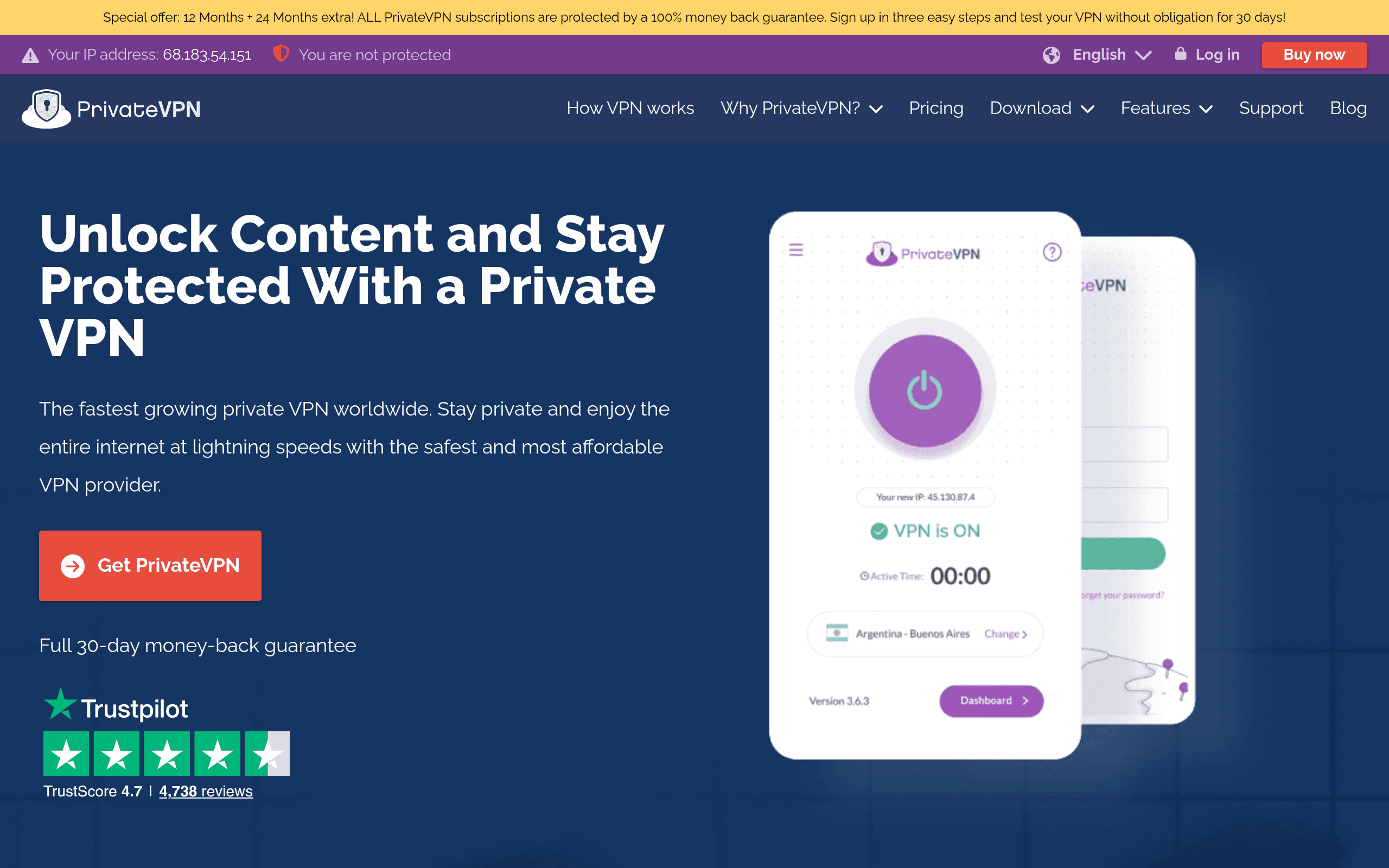
What PrivateVPN Actually Offers
PrivateVPN is a Sweden-based VPN service that's been around for over a decade, running a smaller network of 200+ servers across 63 countries. That server count is worth sitting with for a second, because it's the single biggest thing that separates PrivateVPN from the bigger names in this space — NordVPN and Surfshark both run networks in the thousands of servers. Fewer servers doesn't automatically mean worse service, but it does mean less flexibility if a specific server is congested or gets blocked by a streaming platform.
What PrivateVPN does well is the fundamentals: AES-256 encryption, a no-logs policy, a kill switch, and support for OpenVPN, IKEv2, and WireGuard protocols. It also supports up to 10 simultaneous device connections on a single account, which is generous compared to ExpressVPN's 8. One feature that stands out for a specific type of user is port forwarding, which PrivateVPN still offers manually through its client — useful for torrenting setups and self-hosted services where you need incoming connections to actually reach your machine.
Pricing
PrivateVPN doesn't publish a single fixed price list that stays constant — like most VPN providers, it runs frequent promotional pricing that shifts throughout the year, so treat the numbers below as a snapshot rather than gospel and check the current checkout page before you buy. As of this writing, the general structure looks like this:
- Monthly plan: around $9.90/month, billed monthly, no discount
- 3-month plan: discounted rate, billed as a single upfront charge
- 36-month plan (their headline offer): the cheapest per-month rate, often landing around $2–$2.50/month when paid upfront, sometimes bundled with a few free extra months
There's also a 30-day money-back guarantee, which is standard across the industry but worth confirming before you commit to a multi-year plan — locking into 36 months on a VPN you haven't used yet is a real commitment.
Where PrivateVPN Makes Sense
- Torrenting with port forwarding. This is genuinely one of PrivateVPN's stronger use cases. The manual port forwarding option is something several bigger competitors have scaled back or removed entirely.
- Households with a lot of devices. 10 simultaneous connections covers a family's phones, laptops, and a streaming box without needing a second subscription.
- Budget-conscious long-term users. If you're comfortable committing to a multi-year plan and don't need the broadest server coverage, the long-term pricing is competitive.
- Users who want a smaller, less corporate VPN. Some people specifically avoid the bigger-name VPNs after acquisitions and ownership changes; PrivateVPN has stayed a smaller, independently-run operation.
Where It Falls Short
- Server network size. 200+ servers in 63 countries is thin next to NordVPN's 6,000+ or ExpressVPN's 3,000+. In practice this can mean more crowded servers during peak hours and less consistency unblocking geo-restricted streaming libraries.
- App polish. The desktop and mobile apps are functional but noticeably less refined than ExpressVPN's or Surfshark's — fewer server-selection tools, less granular settings.
- No unlimited connections. Surfshark allows unlimited simultaneous devices on every plan, which beats PrivateVPN's 10 for larger households or shared family accounts.
- Speed consistency. Independent speed tests generally put PrivateVPN behind NordVPN and ExpressVPN, particularly on long-distance server connections.
How It Compares
| PrivateVPN | ExpressVPN | NordVPN | Surfshark | |
|---|---|---|---|---|
| Server network | 200+ servers, 63 countries | 3,000+ servers, 105 countries | 6,000+ servers, 60+ countries | 3,200+ servers, 100 countries |
| Simultaneous devices | 10 | 8 | 10 | Unlimited |
| Long-term price (approx., check current promos) | ~$2–2.50/mo (36-month plan) | ~$6–7/mo (annual plan) | ~$3–5/mo (1–2 year plans) | ~$2–4/mo (1–2 year plans) |
| Port forwarding for torrenting | Yes, manual | No | No | No |
| Best for | Torrenting + multi-device households on a budget | Streaming reliability, polished apps | Best all-around server coverage and speed | Cheapest unlimited-device option |
Note on pricing: all four providers run frequent promotional discounts, and list prices shift often. The relative ordering above (PrivateVPN and Surfshark undercutting ExpressVPN on long-term plans) has held fairly consistently over time, but confirm current numbers directly on each provider's site before buying.
The Verdict
PrivateVPN isn't trying to be the biggest VPN on the market, and it shouldn't be evaluated like it is. If you're comparing it head-to-head against NordVPN or ExpressVPN purely on server count, streaming reliability, or app polish, it loses. Where it earns its keep is torrenting setups that actually need port forwarding, and households that want 10 device slots without paying ExpressVPN's premium pricing.
If streaming a wide range of international Netflix libraries or getting the fastest possible speeds is your priority, NordVPN or ExpressVPN are the safer bets. If you want the cheapest possible unlimited-device plan, Surfshark undercuts everyone. But if port forwarding and a smaller, no-logs provider outside the big three matter to you, PrivateVPN is a legitimate option worth the 30-day trial before committing to a longer plan.