Quiet SEO: First Look at the No-Dashboard WordPress SEO Plugin
Some links in this guide are affiliate links. If you sign up through them, Day Zero Guides may earn a commission at no extra cost to you. This never affects which products we cover or what we say about them. See our affiliate disclosure for details.
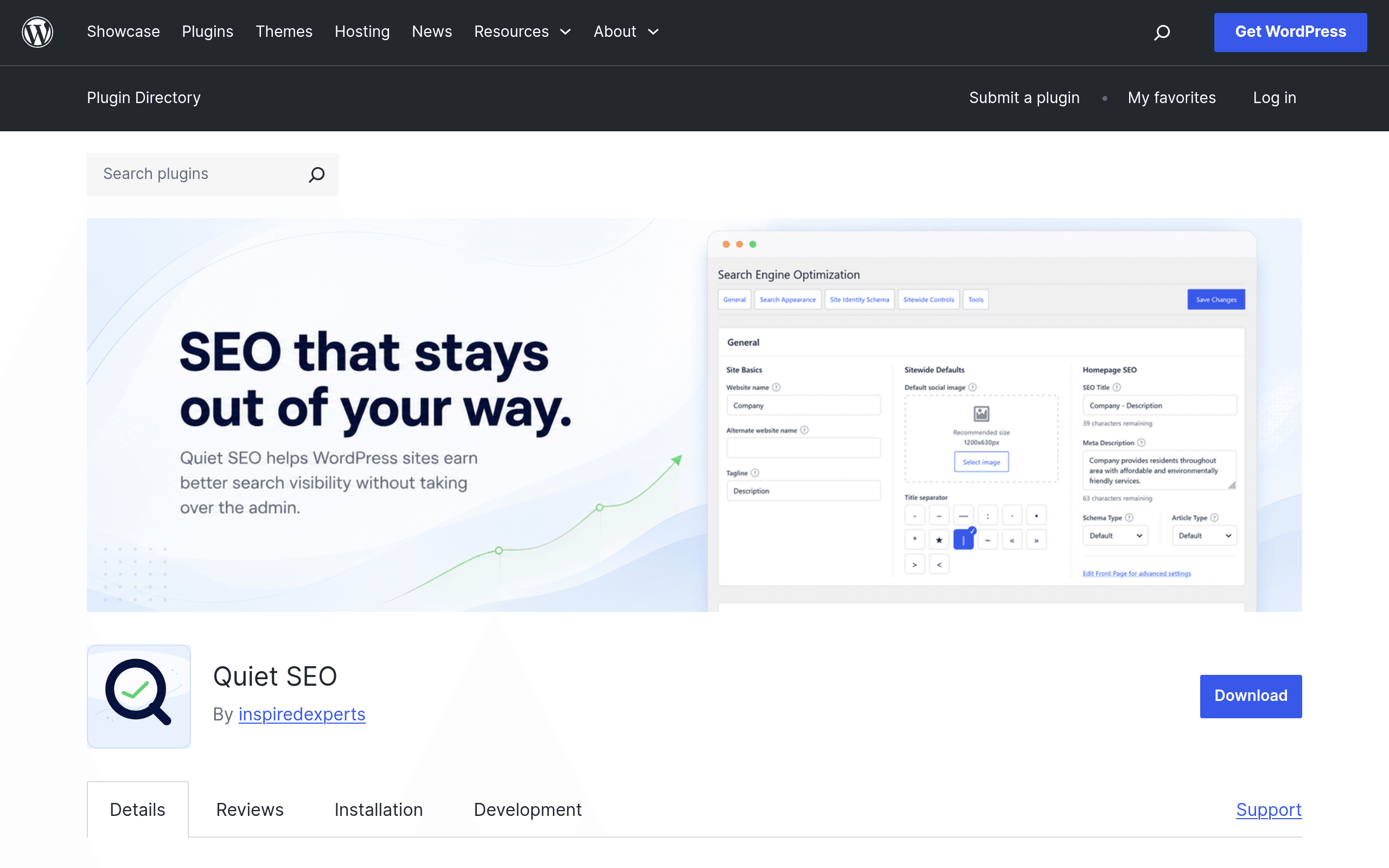
What Quiet SEO Actually Does
Most WordPress SEO plugins have quietly turned into content-marketing suites. Yoast wants to grade your writing with a traffic-light system. Rank Math wants to run a full analytics dashboard and AI content assistant. Quiet SEO, which just landed on the WordPress.org plugin repository, goes the other direction: it handles the core SEO mechanics — meta titles, meta descriptions, canonical URLs, and schema markup — and stops there.
There's no readability score, no green/red/yellow traffic light, no "cornerstone content" concept, and no bundled AI writer. If you've ever disabled half of an SEO plugin's features just to get to the fields you actually need, this is built for that exact frustration.
Core features in this release
- Meta titles and descriptions with template variables (post title, site name, category, custom fields) — the standard stuff, without the walls of upsell copy around each field.
- Canonical URL control per post, page, and archive, useful for sites syndicating content or running parameter-heavy URLs.
- Schema.org markup for articles, products, breadcrumbs, and organization data, generated automatically but overridable per post.
- WooCommerce product SEO support — product-specific title/description templates and product schema (price, availability, review data) without needing a separate WooCommerce SEO add-on.
- Authenticated REST API so external tools, headless front ends, or custom build pipelines can read and write SEO metadata programmatically instead of clicking through wp-admin screens post by post.
- Migration tools that import existing metadata from Yoast SEO, Rank Math, and SEOPress, so switching doesn't mean losing years of hand-written titles and descriptions.
What's notably absent: content scoring, keyword density checks, internal linking suggestions, redirect managers, and AI content generation. That's the point, not an oversight.
Who Should Actually Try This
- Developers managing multiple client sites who are tired of re-disabling the same bloat features on every new install and just want consistent, predictable metadata fields.
- Headless or hybrid WordPress setups that need SEO data exposed via REST API to a decoupled front end (Next.js, Gatsby, etc.) rather than rendered directly by WordPress templates.
- WooCommerce store owners who want product schema and SEO fields without installing a second plugin on top of their existing SEO tool.
- Site owners migrating away from Yoast or Rank Math because of performance complaints, pricing changes, or simply wanting fewer dashboard widgets — and who don't want to manually re-enter metadata for hundreds of posts.
- Performance-conscious teams running page speed audits where every extra database query and admin-ajax call from a bloated SEO plugin shows up in the waterfall.
If you actually use Yoast's content analysis to improve your writing, or you rely on Rank Math's built-in analytics and AI title suggestions, Quiet SEO will feel incomplete by design — those features don't exist here and aren't on a roadmap that's been published anywhere yet.
Pricing: What We Know Right Now
At the time of this writing, Quiet SEO's WordPress.org listing does not publish a pricing page, pro tier, or license structure. The plugin is distributed as a free download through the official WordPress plugin repository, which is consistent with how it's positioned — no upsell banners, no "PRO" badges next to locked fields in the current build. Whether a premium tier arrives later (for things like advanced schema types, multisite license management, or priority support) isn't stated anywhere in the plugin's readme or changelog as of this release. If pricing matters to your decision, treat the current free-to-use status as provisional rather than a permanent commitment, and check the plugin page directly before rolling it out across client sites.
How It Compares
| Quiet SEO | Yoast SEO | Rank Math | SEOPress | |
|---|---|---|---|---|
| Price | Free (no published pricing tiers yet) | Free / Premium from $99/year per site | Free / Pro from $59/year (up to 1 site) | Free / Pro from $49.20/year (unlimited sites) |
| Content scoring & readability checks | None | Yes, built-in analysis with traffic-light scoring | Yes, plus AI-assisted suggestions | Yes, basic content analysis |
| REST API for external metadata management | Yes, authenticated, built into core | Limited, mostly for internal use | Limited | Limited |
| WooCommerce product SEO | Yes, built-in, no add-on required | Requires Yoast WooCommerce SEO add-on | Included in Pro | Included in Pro |
| AI content tools | None | None | Yes (AI title/description generation) | None |
| Migration from other SEO plugins | Yes — imports from Yoast, Rank Math, SEOPress | Limited import support | Yes, from several plugins | Yes, from several plugins |
| Best for | Devs/agencies wanting minimal footprint + API access | Teams that want writing guidance baked into the editor | SEOs wanting an all-in-one dashboard with automation | Agencies wanting unlimited-site licensing at low cost |
The Honest Trade-Off
Quiet SEO isn't trying to replace your SEO strategy — it's trying to get out of your way while still shipping correct titles, descriptions, canonicals, and schema to search engines. That's a narrower promise than Yoast, Rank Math, or SEOPress make, and it means you're on your own for keyword research, content strategy, and technical audits (pair it with something like Screaming Frog or Google Search Console for that).
The REST API and clean migration tools are the two features that stand out most in this initial release — they suggest the plugin is aimed more at developers and agencies managing metadata at scale than at solo bloggers looking for in-editor writing tips. If that's your use case, it's worth a test install today, especially since it's free and the migration tool means you're not locked into a one-way decision if it doesn't fit.
If you depend on your current plugin's content scoring, AI drafting tools, or built-in analytics dashboard, there's nothing here yet to replace those workflows — Quiet SEO simply doesn't compete in that category.