Sentio License Manager: A First Look at WooCommerce's New Login-Based Licensing Plugin
Some links in this guide are affiliate links. If you sign up through them, Day Zero Guides may earn a commission at no extra cost to you. This never affects which products we cover or what we say about them. See our affiliate disclosure for details.
What Sentio License Manager Actually Does
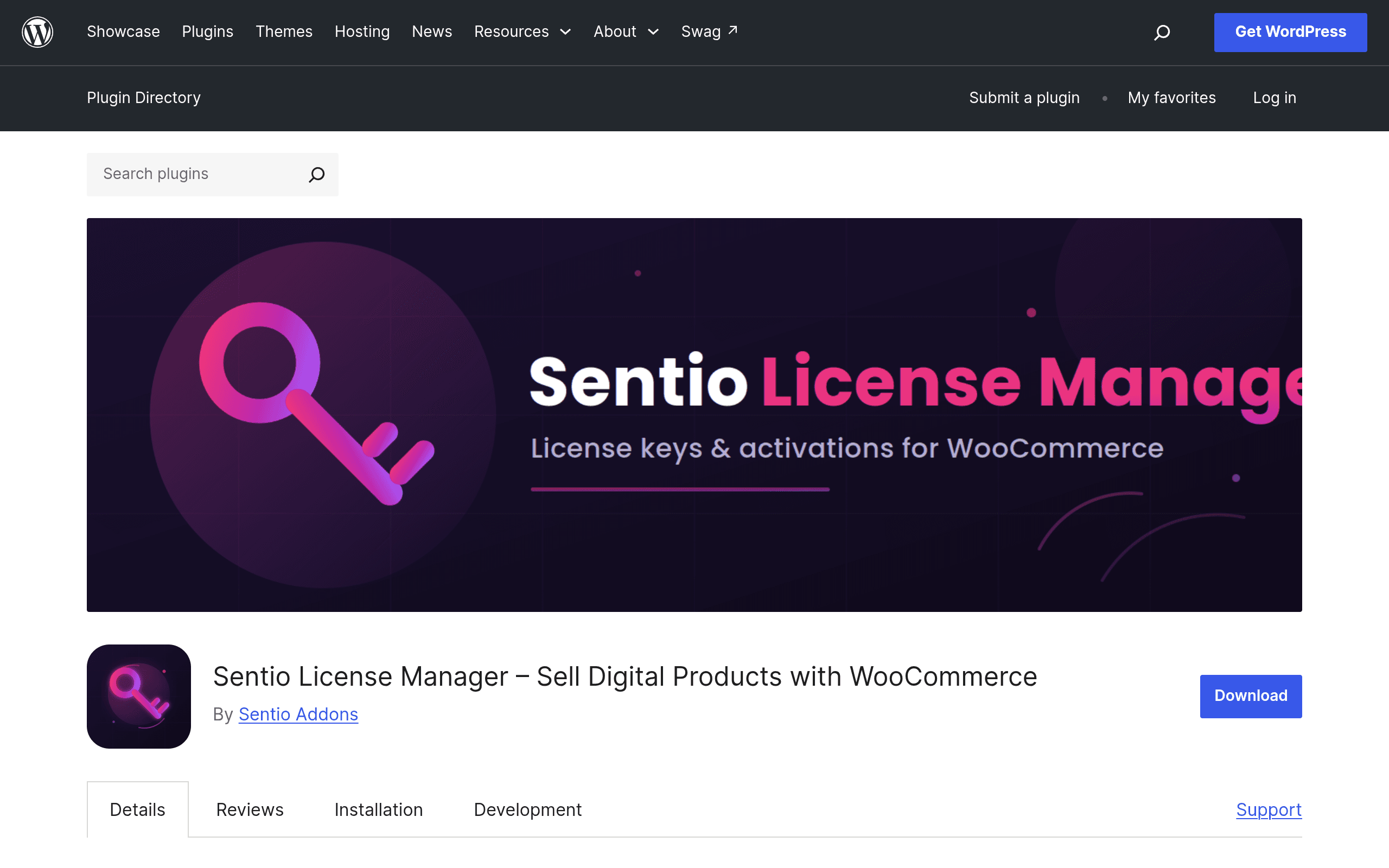
Sentio License Manager is a WooCommerce extension for selling software licenses — plugins, themes, SaaS seats, anything that needs remote activation — but it skips the part everyone hates: copying a 32-character license key out of an email and pasting it into a settings field. Instead, the customer's store account credentials become the activation mechanism. A customer buys a license, logs into their WordPress/WooCommerce site with the same account they used to purchase, and the plugin checks that login against their order history through a REST API you expose to your distributed product.
This matters if you've ever run support for a plugin or theme shop. A huge share of "my license won't activate" tickets are just users mishandling the key: pasting a trailing space, using the wrong site's key, or losing the email entirely. Credential-based activation removes that failure mode because there's no string to mistype.
Core Features Found in the Plugin
- REST API for remote verification — your distributed plugin/theme calls Sentio's endpoints to confirm a customer's login maps to a valid, unexpired license tied to a specific order/product.
- Account-based activation — no license key generation, storage, or copy-paste step for the buyer.
- Migration tools — built-in importers specifically for License Manager for WooCommerce (LMFWC) and Digital License Manager (DLM), so stores already running one of those don't have to manually re-key every existing customer license.
- WooCommerce-native — it hooks into WooCommerce orders and products directly rather than requiring a separate storefront, which is the same integration model LMFWC and DLM use.
Pricing
The core plugin is listed on the official WordPress.org Plugin Directory (wordpress.org/plugins/sentio-license-manager/), which means the base plugin is free to download and install, following the standard WordPress.org listing rules. At the time of this write-up, the developer has not published a separate pricing page, premium tier, or add-on catalog — there's no visible "Pro" version, no per-site fee schedule, and no support-plan pricing listed anywhere in the plugin's readme or WordPress.org listing. If you need paid support, extended API rate limits, or multi-brand licensing at scale, you'll need to contact the developer directly to find out what (if anything) exists beyond the free core — don't assume enterprise features are included just because the base plugin is free.
Concrete Use Cases
- A theme shop selling 3–5 premium WordPress themes that currently emails license keys via WooCommerce order confirmation and fields recurring "where's my key" tickets — switching to account-login activation removes that ticket category entirely.
- A plugin developer migrating off LMFWC who has hundreds of existing customers with issued keys and doesn't want to force a re-purchase or manual CSV re-import — Sentio's LMFWC migration tool is built for exactly this.
- An agency selling a private client-only plugin to 10–20 client sites, where activation is really just "is this a paying client's account" rather than a public commercial license — the credential model maps naturally to that smaller, relationship-based distribution.
- A SaaS-adjacent tool where the WordPress plugin is a companion to a hosted service and you already require account login for the hosted dashboard — you can reuse the same account instead of maintaining a parallel key system.
How It Compares
| Sentio License Manager | License Manager for WooCommerce (LMFWC) | Digital License Manager (DLM) | Easy Digital Downloads (EDD) + Software Licensing | |
|---|---|---|---|---|
| Core price | Free (WordPress.org) | Free core; paid "Advanced" tiers roughly $89–$249/yr depending on site count | Free core; paid Pro extensions around $99/yr | Free core plugin; Software Licensing requires a paid Pass, roughly $99–$399/yr |
| Activation model | Account login/credentials, no key to enter | Traditional generated license key + activation limit per key | Traditional generated license key, similar workflow to LMFWC | License key issued per order, entered manually or via API |
| REST API for remote checks | Yes, built in to the free core | Yes, more advanced endpoints gated to paid tiers | Yes | Yes, part of the Software Licensing extension |
| Migration from competing tools | Yes — dedicated importers for both LMFWC and DLM | No native import path | No native import path | No native import; typically manual CSV/database work |
| Best for | Stores wanting frictionless, key-free customer activation | Teams wanting a mature, widely documented key-based system | Sites already using DLM's bridge/integration ecosystem | Larger digital product businesses wanting a full storefront + licensing + auto-update suite |
What to Watch Out For
This is a newly listed plugin on WordPress.org, which means it doesn't yet have the years of production hardening, third-party integrations, or Stack Overflow/support-forum history that LMFWC and DLM have accumulated. Concretely: check the "active installs" and "tested up to" WordPress version on the plugin page before deploying to a revenue-critical store, and test the migration tool on a staging copy of your site first — migrating live customer license data without a tested rollback plan is the one place a new tool like this can cause real damage. Also confirm the REST API's authentication approach fits your distributed plugin's existing update-checker code, since credential-based activation is architecturally different from the key-based license_key parameter most existing plugin update libraries (like the common EDD/LMFWC-style updater classes) expect — you may need to rewrite your client-side activation check rather than drop this in as a swap.
Bottom Line
If you're starting fresh or already frustrated with license-key support tickets, Sentio's login-based model is a genuinely different approach worth testing on a staging site today, especially since it's free and includes LMFWC/DLM migration tooling. If you need proven, widely documented enterprise licensing at scale, LMFWC's paid tiers or EDD's Software Licensing extension still have the longer track record.