Shazite SEO Content Optimizer: First Look at the New Real-Time Gutenberg SEO Scorer
Some links in this guide are affiliate links. If you sign up through them, Day Zero Guides may earn a commission at no extra cost to you. This never affects which products we cover or what we say about them. See our affiliate disclosure for details.
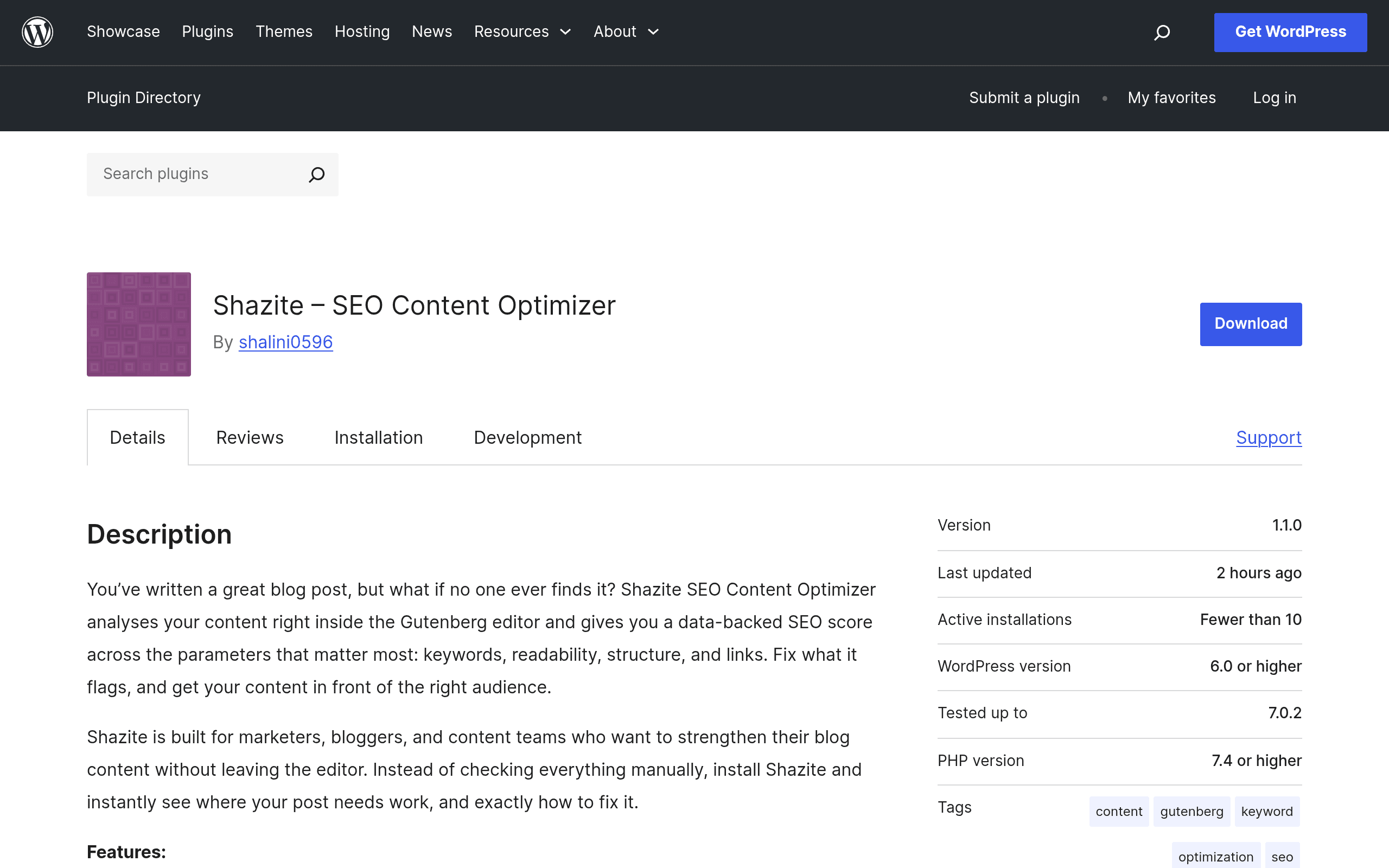
What Shazite Actually Does
Shazite – SEO Content Optimizer is a new WordPress plugin, distributed through the official WordPress.org plugin repository, that plugs directly into the Gutenberg block editor. As you write a post, it sends your content to an external API hosted on Vercel and returns a live SEO score from 0 to 100, broken into four buckets: keyword usage, readability, structural formatting (headings, paragraph length, list usage), and internal linking. It also renders a Google-style SERP preview so you can see how your title and meta description will look before you hit publish, and it gives you a checklist of specific fixes rather than just a raw number.
This puts it in the same category as Yoast SEO and Rank Math's content analysis panel, but the architecture is different: instead of running all scoring logic client-side or via a bundled PHP engine, Shazite offloads the analysis to its own hosted API. That's worth flagging up front because it means your draft content — including unpublished posts — leaves your server and gets processed remotely before the score comes back.
Pricing: What's Actually Published (and What Isn't)
As of this writing, Shazite has no public pricing page, no pricing tiers listed in its WordPress.org readme, and no in-plugin upgrade prompts documented anywhere. The plugin listing itself is free to install, which is standard for anything distributed through the WordPress.org repository — that's a distribution requirement, not necessarily a statement about the product's long-term business model.
Because scoring runs through an external Vercel-hosted API rather than local PHP, there's an ongoing server cost on Shazite's end for every analysis request, which usually signals one of two outcomes down the line: a metered free tier with a paid plan for higher volume, or a temporary free beta while the product validates demand before introducing pricing. Neither is confirmed. If you're evaluating this for a client site or an agency workflow, don't assume it will stay free — budget for the possibility of a paid tier appearing after initial adoption, the way many API-backed WordPress plugins (grammar checkers, AI writing assistants, image compressors) have done.
Concrete Use Cases
- A solo blogger optimizing a single post before publishing: You draft in Gutenberg, get a live score as you type, and work through the checklist (e.g., "add 2 more internal links," "shorten paragraph 4," "add your focus keyword to an H2") without leaving the editor.
- An affiliate site owner checking SERP snippet length: The SERP preview shows real-time truncation of your title tag and meta description so you're not guessing whether Google will cut off your carefully written headline.
- A content editor doing a pass on structure: Because Shazite scores heading hierarchy and paragraph length separately from keyword usage, you can use it as a structural readability check even on posts that already have solid SEO copy.
- A small team standardizing internal linking: The internal linking check flags posts that are under-linked, which is useful if your site has grown past the point where writers remember which older posts to reference.
What it is not yet built for: bulk site audits, XML sitemap generation, schema markup, or technical SEO issues like canonical tags and redirects — it's scoped narrowly to per-post content quality, not full on-page SEO plugin territory.
How It Compares to the Established Players
| Feature | Shazite | Yoast SEO | Rank Math | All in One SEO |
|---|---|---|---|---|
| Starting price | Not published (free to install) | Free / Premium $99/yr per site | Free / Pro $59/yr per site | Free / Pro $49.50/yr (intro) |
| Real-time content score | Yes, 0-100, via external API | Yes, traffic-light system | Yes, 0-100 score | Yes, TruSEO score |
| Readability analysis | Yes, part of the 4-part score | Yes, separate readability tab | Yes, built in | Yes, built in |
| Internal linking suggestions | Yes, dedicated checklist item | Limited (Premium has link suggestions) | Yes, in Pro | Yes, in Pro (Link Assistant) |
| Schema markup / rich snippets | Not included | Yes | Yes, extensive schema builder | Yes, extensive schema builder |
| XML sitemaps, redirects, technical SEO | Not included | Yes | Yes | Yes |
| Processing | External API (Vercel) | Local (client-side JS) | Local (client-side JS) | Local (client-side JS) |
| Best for | Writers who want a fast, focused content-quality check inside the editor | Sites that want an established, well-documented all-rounder | Sites wanting the most generous free feature set | Agencies already in the AIOSEO ecosystem |
The biggest practical difference isn't features — it's architecture. Yoast, Rank Math, and AIOSEO all run their scoring logic locally in your browser via JavaScript, so there's no data leaving your site during analysis. Shazite's API-based approach means every draft gets sent to a third-party server for scoring. For most personal blogs that's a non-issue; for anything under NDA, embargoed announcements, or client-confidential drafts, it's worth checking Shazite's privacy policy and data retention practices before pasting in sensitive content — details that weren't published in the plugin listing at the time of this review.
Should You Install It Today?
If you're curious and your content isn't sensitive, there's very little downside to trying Shazite right now — it's free to install, doesn't appear to require replacing Yoast or Rank Math (you can technically run it alongside them, though you'll want to check for editor panel conflicts), and the SERP preview plus internal-linking checklist are genuinely useful additions that even Yoast's free tier handles more clumsily.
What holds this back from a full recommendation is exactly what's missing: no visible changelog history to gauge how actively it's maintained, no published pricing to know what you're committing to as usage scales, and no transparency yet on what happens to content sent to the Vercel API. Treat this as a promising day-one plugin worth testing on a low-stakes blog first, not something to roll out across a client's production site until pricing and data-handling details are published.