Surfshark VPN Review: Pricing, Features, and How It Compares
By Day Zero Guides Editorial · How we produce guides
Some links in this guide are affiliate links. If you sign up through them, Day Zero Guides may earn a commission at no extra cost to you. This never affects which products we cover or what we say about them. See our affiliate disclosure for details.
What Surfshark Actually Is
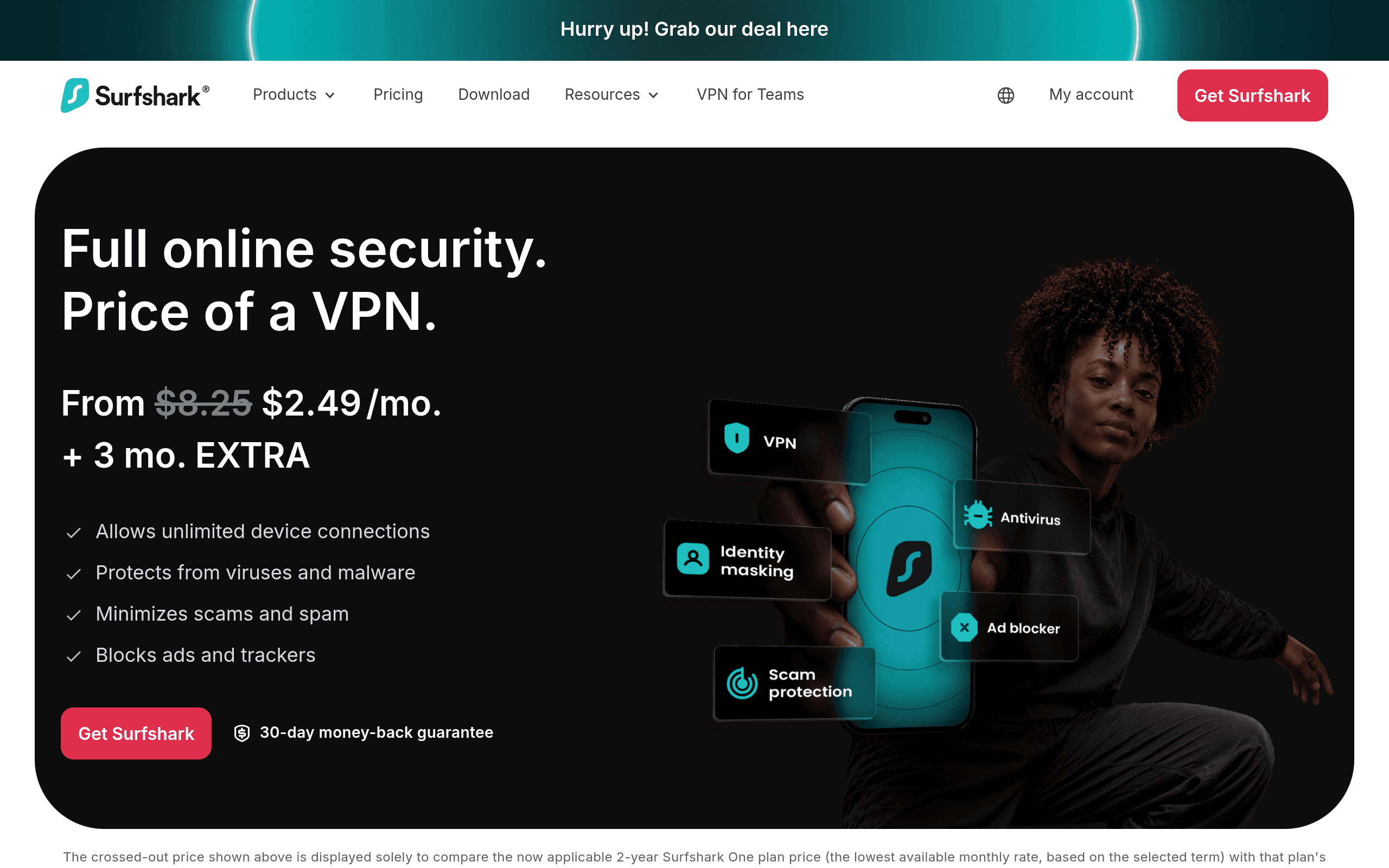
Surfshark has grown from a budget VPN upstart into a broader privacy suite. Beyond the core VPN — which encrypts your traffic and routes it through one of 4,500+ RAM-only servers in 100+ countries — the company now bundles antivirus scanning, Incogni (a data-broker removal service that submits opt-out requests on your behalf), Alert (identity theft and breach monitoring), and virtual identity tools like a fake IP/location generator for ad tracking evasion. The company cites over 40 million downloads, which puts it in the same tier of adoption as ExpressVPN and NordVPN, though download counts don't tell you much about actual paid retention.
The RAM-only server architecture is worth calling out specifically: because these servers wipe data on every reboot, there's no persistent disk storage of logs or session data even if a server were physically seized. NordVPN and ExpressVPN both moved to similar architectures years ago, so this is now table stakes among the top-tier providers rather than a unique differentiator.
Pricing Tiers
Surfshark doesn't publish a single flat rate — like most VPNs in this category, pricing is structured around long-term commitments with steep discounts, and the exact promotional rate shifts frequently. As of recent cycles, the plan structure looks like this:
- Starter: VPN only, no ad blocker or extras — the cheapest entry point, typically billed as a 24-month plan with a low introductory monthly rate that renews at a higher standard rate.
- One: VPN plus antivirus and Surfshark Search (a private search tool), aimed at people who want basic device protection alongside the VPN.
- One+: Adds Incogni (data removal) and Alert (identity monitoring) on top of everything in the One tier — this is the full privacy-suite package and costs meaningfully more per month than Starter.
Monthly, no-commitment plans exist for all three tiers but cost several times more per month than the long-term plans. As with most VPN vendors, the advertised "per month" price on a 24-month plan is a one-time introductory rate — the renewal price after that term is higher, so check the fine print before committing rather than assuming the front-page number is what you'll pay long-term. A 30-day money-back guarantee applies across plans.
Where It's Actually Useful
- Unlimited simultaneous devices: Unlike most competitors that cap device counts (typically 5-10), Surfshark allows unlimited connections per account. This matters if you're covering a household with phones, laptops, smart TVs, and a router all at once — you're not juggling device slots.
- Streaming access: Works reliably with Netflix libraries in multiple countries, BBC iPlayer, and Disney+, which is the primary use case for most subscribers.
- Bundled data removal (Incogni): If you're specifically trying to get your name scrubbed from people-search sites and data broker databases, having Incogni bundled into One+ saves you from paying for it as a separate $7-15/month service.
- Torrenting and P2P: Dedicated servers support P2P traffic, and the no-logs policy has held up under third-party audit.
- Budget-conscious multi-device households: The unlimited-device model makes per-device cost drop fast for larger families.
Where It Falls Short
Speeds are solid but not category-leading — ExpressVPN's Lightway protocol and NordVPN's NordLynx implementation both tend to edge out Surfshark in raw throughput benchmarks, though the gap is small enough that most users won't notice outside of large file transfers. The antivirus component is functional but not a replacement for dedicated endpoint protection like Malwarebytes or Bitdefender if you have specific malware concerns. And because pricing is promo-driven, the renewal rate after your first term can come as an unpleasant surprise if you don't cancel or renegotiate.
How It Compares
| Surfshark | ExpressVPN | NordVPN | CyberGhost | |
|---|---|---|---|---|
| Simultaneous devices | Unlimited | 8 | 10 | 7 |
| Server-side architecture | RAM-only, 100+ countries | RAM-only (TrustedServer), 105 countries | RAM-only (NordLynx), 60+ countries | Disk-based on some servers, 100 countries |
| Bundled extras | Antivirus, Incogni (data removal), Alert (breach monitoring) | Threat Manager (tracker blocking) only | Threat Protection (ad/malware block), password manager add-on | Basic ad blocker only |
| Independent no-logs audit | Yes (Deloitte) | Yes (PwC/KPMG) | Yes (Deloitte) | Yes |
| Typical positioning | Best value for multi-device households wanting bundled privacy tools | Best raw speed and polish, priced at a premium | Strong middle ground on speed and price | Cheapest entry point, fewer extras |
Who Should Actually Buy This
Surfshark makes the most sense if you're covering a lot of devices under one household and want the data-removal and identity-monitoring pieces bundled rather than subscribed to separately — the One+ tier effectively replaces three separate subscriptions (VPN, Incogni, breach monitoring) with one. If your only need is a fast, no-frills VPN for streaming and general privacy, the Starter tier undercuts ExpressVPN on price for comparable coverage. If raw speed is your top priority or you want the most polished app experience, ExpressVPN is still worth the premium. If you want the best balance of speed and price without the extra bundled services, NordVPN remains a strong default. Skip Surfshark's more expensive tiers if you already pay for a dedicated antivirus and identity monitoring service elsewhere — you'd be paying twice for overlapping coverage.
Update — 2026-08-19
Surfshark has added a new "Identity Theft Coverage" feature offering mental health counseling and up to $1M reimbursement for identity theft recovery expenses, plus support from a licensed identity theft investigator. This is a material addition to the product's feature set beyond what was described in the guide.