Macherre: A First Look at the New Skin-Profile-Based Ingredient Scanner
Some links in this guide are affiliate links. If you sign up through them, Day Zero Guides may earn a commission at no extra cost to you. This never affects which products we cover or what we say about them. See our affiliate disclosure for details.
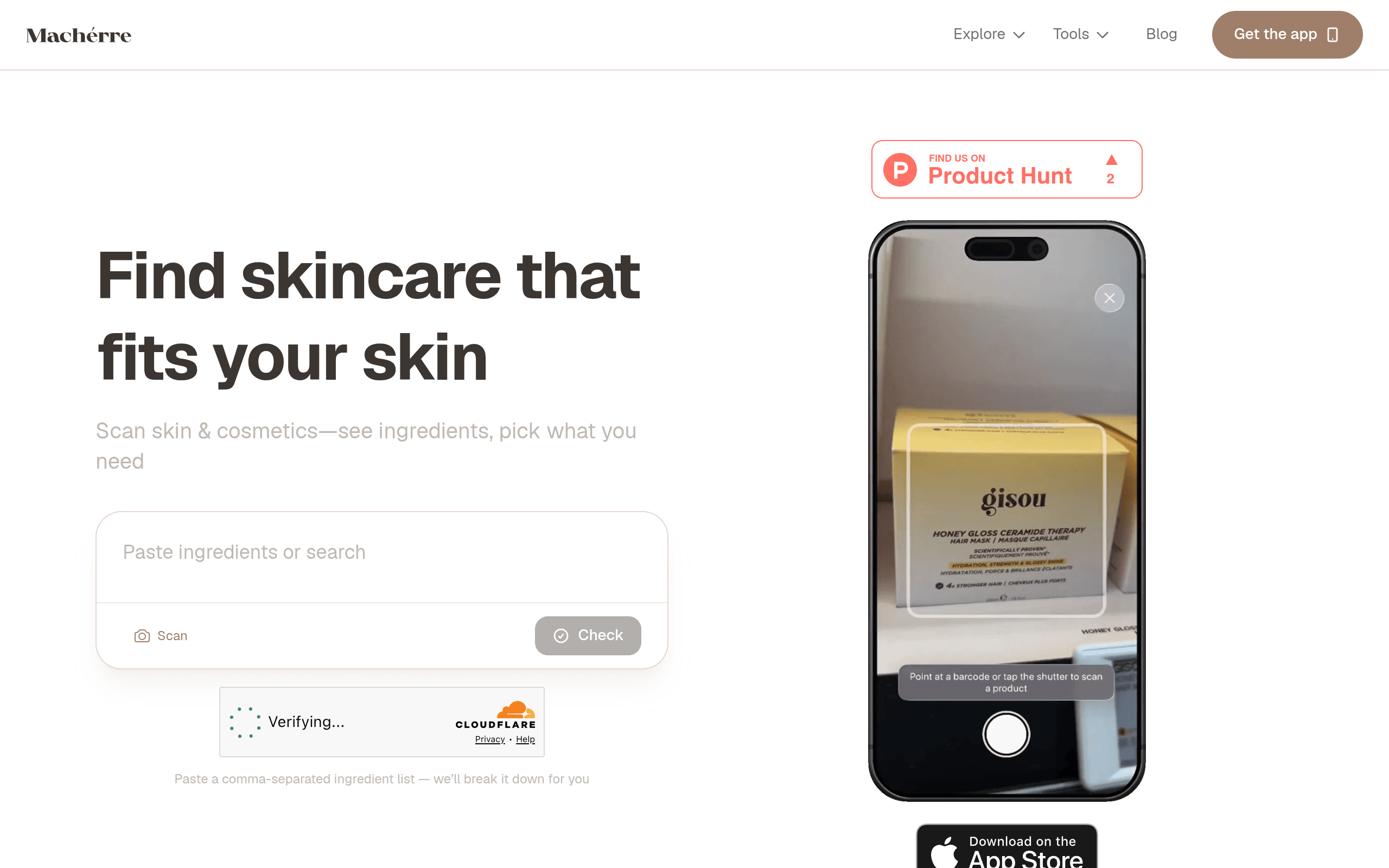
What Macherre actually does
Most ingredient-scanning apps tell you the same thing no matter who you are: this product has a "7.5/10 safety score" or a green/yellow/red rating based on generic hazard databases. Macherre's pitch is different — it builds a profile of your skin (type, known sensitivities, current concerns like hyperpigmentation or texture, and your stated goals) and then scores each product's formulation against that profile, not against a one-size-fits-all rubric.
In practice, that means two people scanning the exact same bottle of niacinamide serum can get different compatibility scores: one flagged for a fragrance additive because they logged a fragrance sensitivity, the other cleared because they didn't. That's the core differentiator, and it's the reason this is worth a look rather than being "just another INCI lookup tool."
The app is built around four pieces:
- Skin profile setup — a guided intake covering skin type, sensitivities (retinoids, fragrance, essential oils, alcohol, etc.), and goals (barrier repair, acne, anti-aging, evening tone)
- Ingredient scanning — scan a barcode or search a product to get a full ingredient breakdown with plain-language explanations of what each ingredient does and any potential conflicts with your profile
- Compatibility scoring — a personalized score plus a breakdown of why something scored the way it did (e.g., "contains 2 ingredients that may irritate based on your sensitivity to essential oils")
- Routine building and comparison tools — lay out a full AM/PM routine and check it for ingredient conflicts (like mixing vitamin C with certain acids), or put two products side by side to see which fits your profile better
There's also a reviews layer, so you're not relying purely on algorithmic scoring — you can see how other users with similar skin profiles rated a product.
Concrete use cases where this is actually useful
- You're retinol-sensitive but keep buying "anti-aging" products. Instead of parsing an INCI list yourself to spot encapsulated retinol or retinaldehyde under a marketing name, Macherre flags it against your logged sensitivity before you buy.
- You're building a routine and worried about active-ingredient conflicts. Layering vitamin C, niacinamide, and an exfoliating acid without knowing the interactions is one of the most common ways people end up with a compromised skin barrier. The routine builder is meant to catch this at the planning stage.
- You're comparing two "dupe" products. A $12 drugstore serum and a $58 serum claiming the same benefit — the comparison tool lets you check whether the cheaper one actually has a comparable active ingredient concentration and profile, not just similar marketing language.
- You have a documented fragrance or essential oil sensitivity and are tired of reading ingredient panels in bad lighting at the store.
Pricing: what's known and what isn't
As of this writing, Macherre has not published a public pricing page or tiered plan breakdown on its site or app store listing. The app is downloadable and usable without a visible up-front paywall on core scanning and profile features, which suggests a freemium model is likely, but Macherre hasn't confirmed what (if anything) sits behind a paid tier — routine building, unlimited comparisons, and advanced scoring detail are the features most likely to eventually be gated based on how comparable apps in this space monetize.
If pricing is a dealbreaker for you, the honest answer right now is: try it before you commit to anything, because there's nothing to commit to yet in terms of disclosed cost. Don't assume it's free forever — treat the current state as a launch window rather than a permanent pricing model.
How it stacks up against the apps you already know
| Macherre | INCIDecoder | Yuka | Think Dirty | |
|---|---|---|---|---|
| Price | Not published; no confirmed paid tier yet | Free, with optional "Pro" ($4.99/mo or similar one-time unlocks for ad-free/extra features) | Free, with Yuka Premium (~$16.99/year) for offline scans and extra history | Free, with no major paid tier historically |
| Personalization | Full skin profile (type, sensitivities, goals) drives every score | Ingredient-by-ingredient breakdown, but scoring isn't personalized to you | Health/safety score based on hazard databases, not your skin specifically | "Dirty Meter" score based on ingredient hazard lists, not personalized |
| Routine tools | Built-in routine builder that checks for ingredient conflicts across your full AM/PM lineup | No routine builder — it's a lookup/reference tool | No routine builder | No routine builder |
| Product comparison | Side-by-side comparison weighted by your profile | Can view multiple products but no profile-weighted comparison | Limited comparison via scan history | Limited comparison via scan history |
| Best for | Someone actively managing sensitivities or building a multi-step routine | Quickly decoding what an ingredient actually is and its typical function | Quick single-scan safety check on the go, broader than skincare (food + cosmetics) | Fast "clean beauty" gut-check while shopping in store |
The honest takeaway: INCIDecoder is still the better pure reference tool if you just want to know what an ingredient is. Yuka and Think Dirty are faster for a quick in-store yes/no gut check but don't account for your actual skin. Macherre is doing something narrower and arguably more useful if you have real sensitivities or are actively building a routine: it's trying to answer "is this right for my skin" rather than "is this ingredient generally considered safe."
Where it's likely to fall short right now
As a newly launched app, a few things to go in expecting:
- Database coverage will be thinner than INCIDecoder's, which has years of crowdsourced ingredient data behind it. Expect to hit products or niche brands that aren't in Macherre's database yet.
- No published pricing means no guarantee of what you'll keep access to if you build out a full routine and profile now.
- Personalized scoring is only as good as your intake. If you're vague or unsure about your sensitivities when setting up your profile, the compatibility scores will be too.
Should you try it today
If you've got specific, known skin sensitivities and have been manually cross-referencing ingredient lists against them for years, Macherre is worth downloading today just to see whether the personalized scoring saves you the manual work. If you mainly want a fast, general "is this clean" check while standing in a store aisle, Yuka or Think Dirty will still get you an answer faster with a more mature database. If you're a label-reading nerd who wants to understand what an ingredient does, keep INCIDecoder open in a tab regardless — it's complementary to Macherre, not a replacement for it.