MyFreud First Look: Can an AI Therapist-Style App Replace Your Meditation Habit?
Some links in this guide are affiliate links. If you sign up through them, Day Zero Guides may earn a commission at no extra cost to you. This never affects which products we cover or what we say about them. See our affiliate disclosure for details.
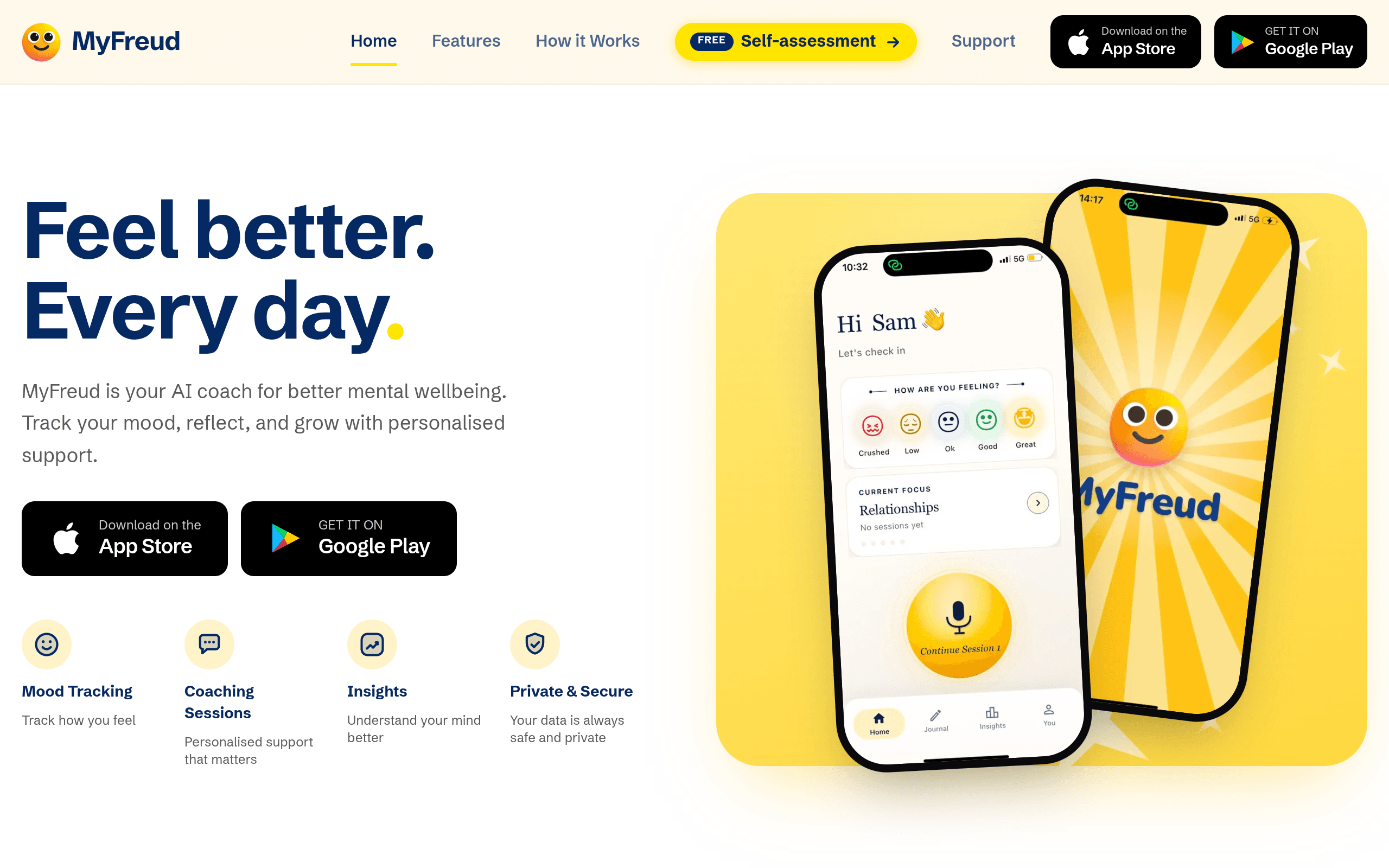
What MyFreud Actually Is
MyFreud is a newly launched AI-powered mental wellbeing app built around a three-part loop: check-ins (quick mood and state logging), guided coaching sessions (structured, AI-driven conversations styled after therapeutic frameworks), and reflection (data visualization that shows patterns in your mood, stress, and habits over time). The name is an obvious nod to psychoanalytic tradition, and the product leans into that positioning — it's less "breathe for 3 minutes" and more "let's talk through what's actually bothering you and track it."
Unlike pure meditation apps, MyFreud's core loop is conversational and diagnostic-feeling rather than passive. You check in, the AI asks follow-up questions based on your patterns, and it routes you into a session focused on whatever's showing up most — anxiety, a recurring relationship conflict, a stress spike tied to work, or a habit you're trying to break. The data visualization piece is meant to be the payoff: instead of just journaling into a void, you can see a graph of your anxiety trending down over three weeks, or a heatmap of which days trigger the most stress.
Who This Is Actually For
- Someone who's tried Headspace or Calm and found the meditation format too passive — you want something that talks back and adapts instead of playing the same body scan track.
- Someone managing a recurring, nameable issue — a difficult relationship, recurring anxiety spikes before a specific trigger (meetings, social events), or a habit like doomscrolling or late-night eating — rather than general "I want to relax" use.
- Data-driven self-improvers who want to see quantified mood/stress trends rather than relying on how they "feel" they're doing.
- Not a fit if you're in acute crisis or need clinical care — this is a self-guided wellbeing tool, not a licensed therapy replacement, and nothing in the product positions it as one.
Pricing: The Honest Answer
At the time of this writing, MyFreud has not published a public pricing page or tier breakdown. The app is accessible directly from myfreud.com, but there's no visible free-vs-paid split, no listed monthly/annual rate, and no enterprise or team plan mentioned anywhere on the site. That's worth flagging clearly: every other app in this category (Headspace, Calm) publishes pricing upfront, and Woebot's consumer pricing was well known before it was discontinued. MyFreud not doing so likely means it's either still in a soft launch / early access phase, gating pricing behind signup, or testing pricing dynamically. If you're evaluating this for budget purposes, sign up and check the in-app paywall directly before assuming a cost — don't take a third-party estimate as fact here.
How It Compares
| MyFreud | Headspace | Calm | Woebot | |
|---|---|---|---|---|
| Price | Not published (check in-app) | $12.99/mo or $69.99/yr | $14.99/mo or $69.99/yr | Consumer app discontinued in 2024; now only available via employer/health-plan partnerships |
| Core format | AI check-ins → coaching sessions → data visualization/reflection | Guided meditation, sleepcasts, courses | Guided meditation, Sleep Stories, masterclasses | Structured CBT-style chatbot conversations (legacy) |
| Personalization | Adapts sessions based on logged mood/stress/habit patterns | Static content library with light recommendation engine | Static content library with light recommendation engine | Scripted CBT flows, minimal true personalization |
| Best for | People who want a conversational, trackable approach to a specific recurring issue | People who want structured meditation and sleep content | People who want ambient relaxation, sleep, and narrated content | Organizations offering clinically-adjacent CBT support to employees/patients |
| Data/analytics | Central feature — mood/stress trend graphs and pattern surfacing | Minimal — streaks and session history only | Minimal — streaks and session history only | N/A (discontinued for consumers) |
Concrete Use Cases
- Pre-meeting anxiety spikes: Log a check-in before a recurring stressful meeting; over a few weeks MyFreud's visualization can show whether a specific coping technique from your sessions is actually reducing your reported anxiety score on those days, versus just feeling that way.
- A repeating relationship conflict: Instead of a generic "communication" meditation track, you check in after an argument, and the coaching session works through the specific dynamic — then reflection data shows if frequency or intensity of those conflicts is trending down.
- Breaking a habit (e.g., late-night phone use): Daily check-ins tagged to the habit let you see correlation between your stress levels and the behavior, which is the kind of pattern-matching Headspace and Calm's static content libraries aren't built to surface.
Where It Falls Short Right Now
- No transparent pricing is the biggest trust gap at launch — competitors all lead with clear cost.
- No clinical backing disclosed on the site in the way Woebot originally built its credibility on CBT research partnerships.
- Unproven at scale: this is a first look at a new product, not a long-term efficacy review — the mood-tracking-to-outcome claims are the product's pitch, not yet independently verified.
Bottom Line
If you want an app that treats your mental wellbeing like a dataset with patterns worth surfacing — rather than a library of calming audio — MyFreud's check-in/session/reflection loop is a genuinely different structure than Headspace or Calm, and it's filling roughly the conversational space Woebot vacated when it went enterprise-only. The catch is you'll have to sign up and hit the paywall yourself to find out what it costs, since that information isn't public yet. Worth trying today if you're curious and the lack of pricing transparency doesn't bother you; worth waiting on if you want to compare costs before committing.